Services
Monument Repair
Leaning stones, failed foundations, and structural damage are more common than most families realize. We assess the issue honestly and fix it properly, so it stays fixed.
The Approach
Repair starts at the cause
Most monument issues come from below the surface. Ground movement, settling, freeze-thaw cycles, and how the stone was originally set are the usual causes. We identify which is at work before we propose a fix.
Assessment first
We look at the ground conditions, the state of the foundation, and how the stone has shifted before recommending anything. A photo and a few notes are usually enough to start. We come on-site for stones we can't fully evaluate from a picture.
Honest scoping
We're up front about what's repairable, what isn't, and what each path costs. Some breaks bond well, some don't, and some stones are too far gone to save without overpromising. Where there are multiple paths to a good outcome, including temporary stabilization, we explain what each one buys you.
What we repair
Most repair calls we get are on monuments we didn't build. That's normal. We work on stones from any source. The four most common types of work are below. The right one for your situation depends on the stone, the damage, the lot, and what makes sense for the family.
Releveling
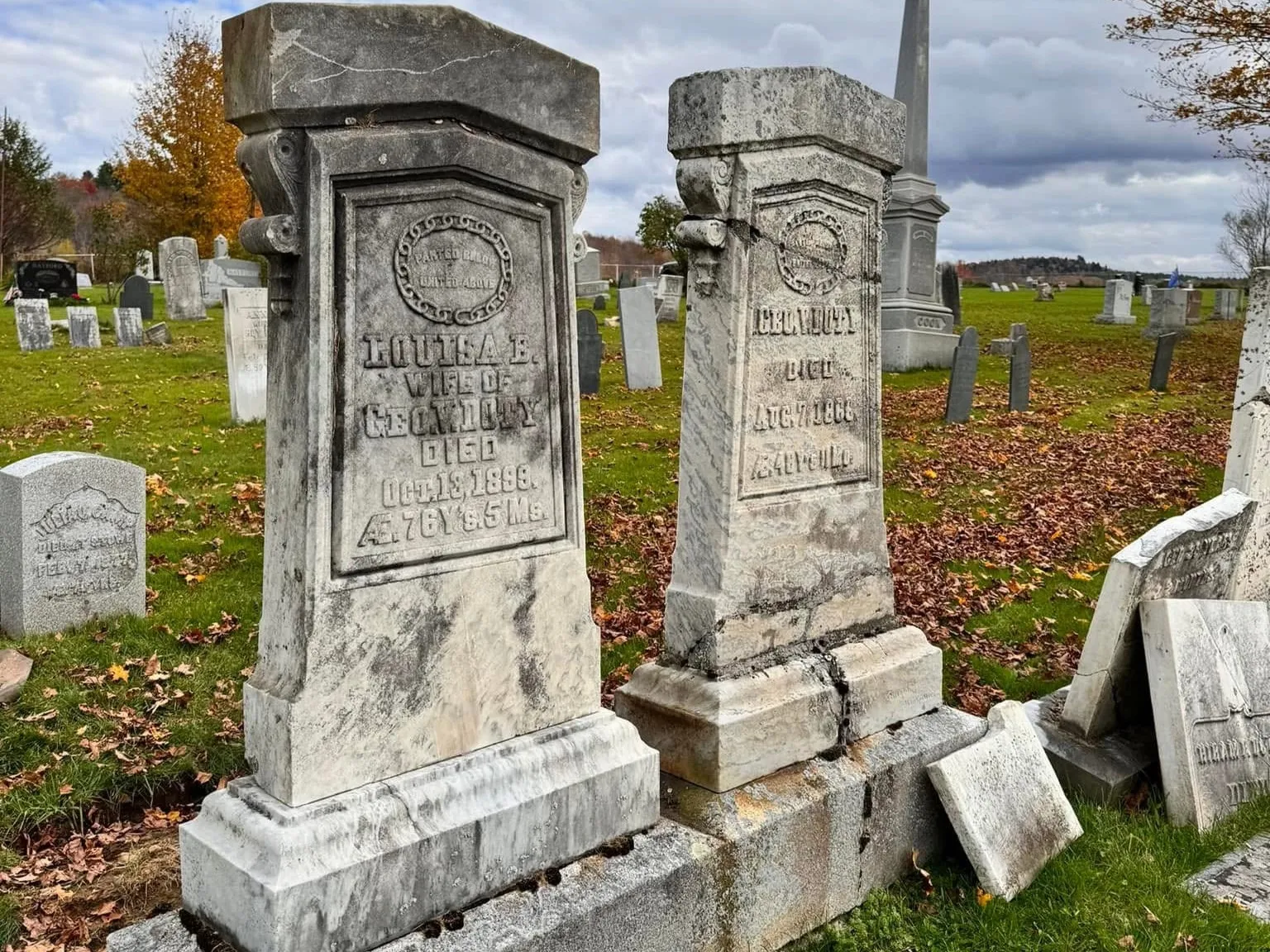
Releveling and tablet straightening are used when a stone has shifted, settled, or leaned but remains otherwise sound. The goal is to bring it back into proper position without more intervention than the situation calls for.
Resetting
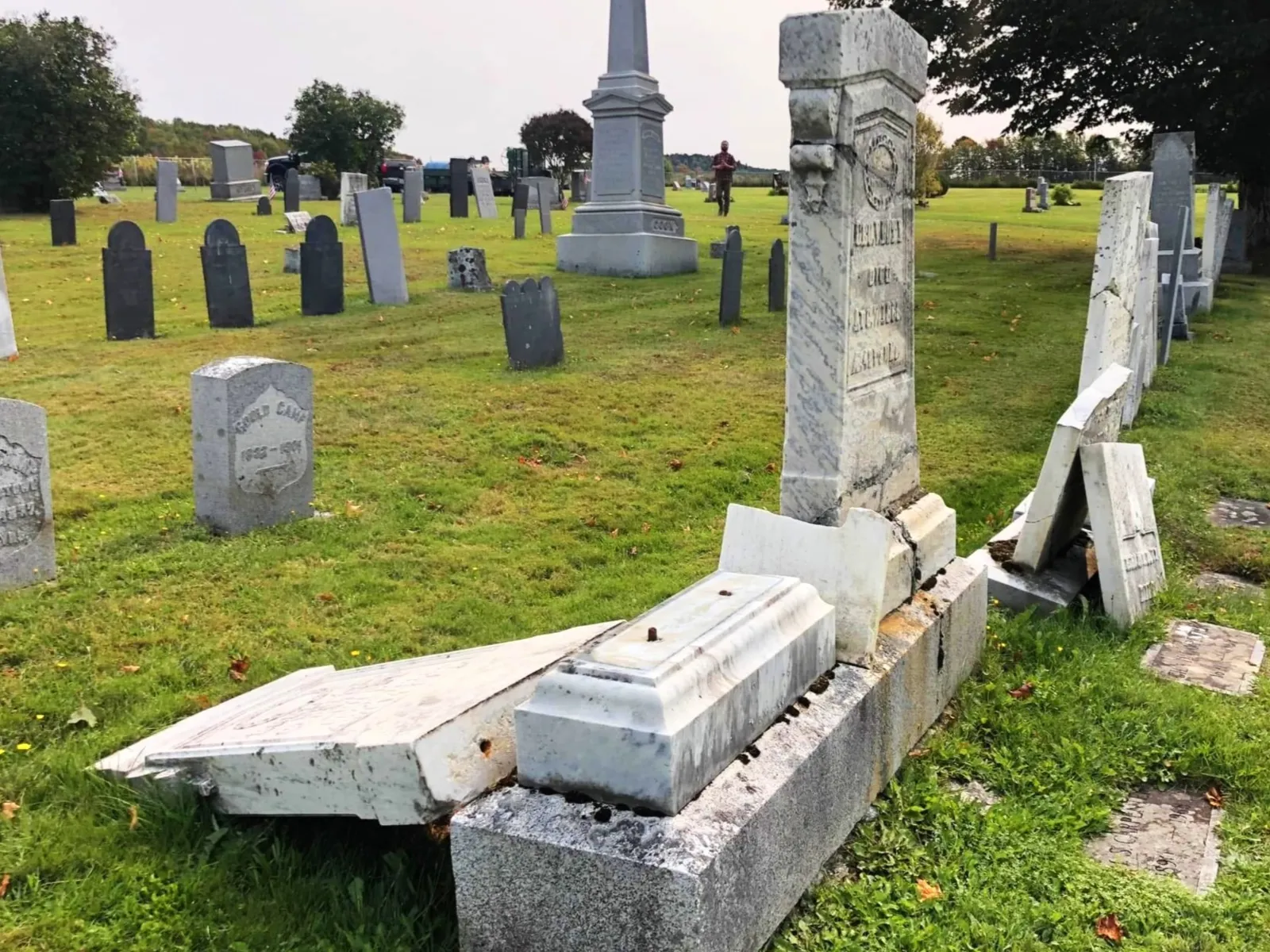
When pieces of a monument have separated, typically a die that's come loose from its base, resetting puts them back together. We clean the joint, re-bond the pieces, and address the bedding underneath if needed, so the monument stands stable and aligned again.
Foundation replacement
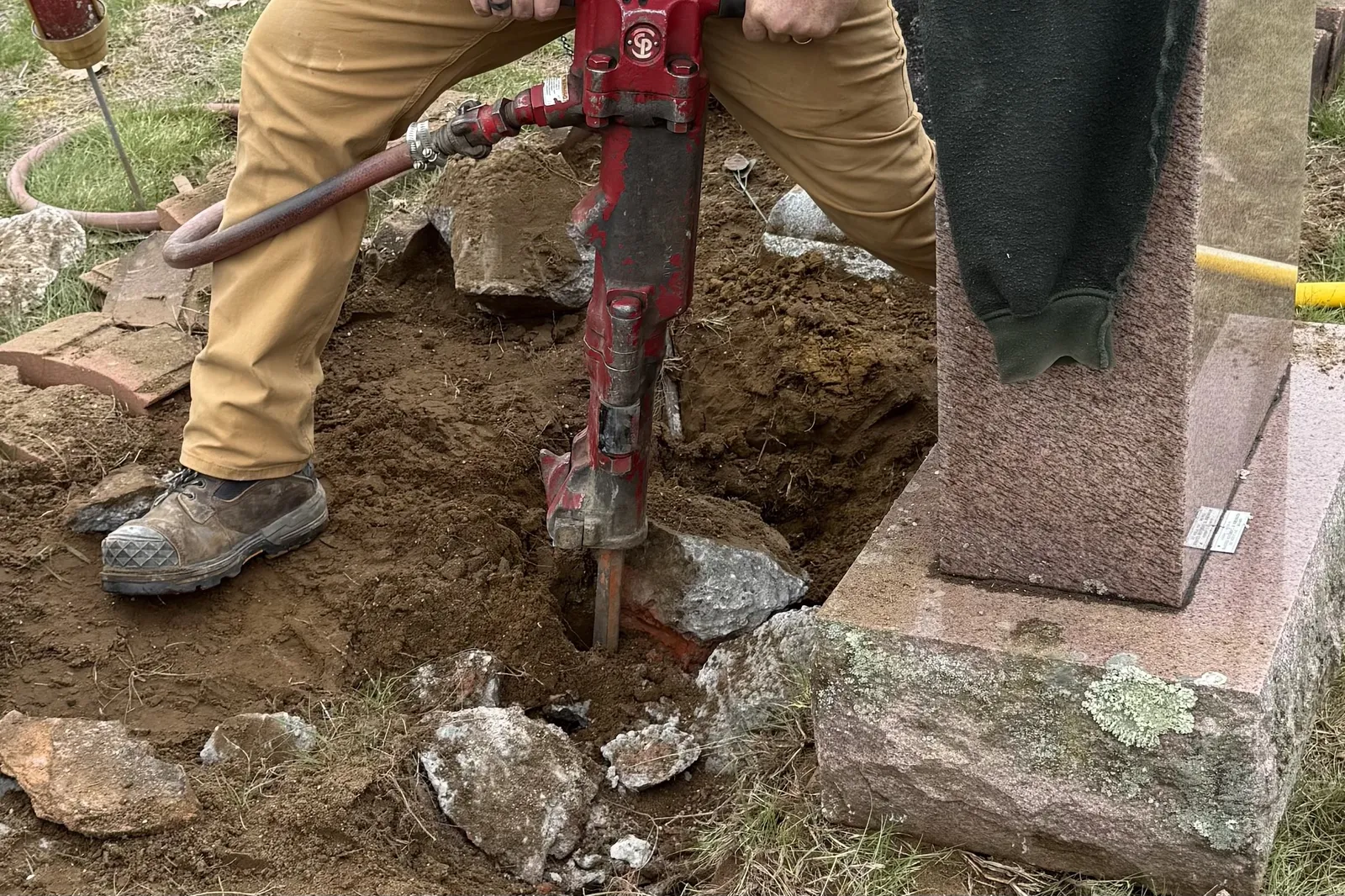
When the foundation has failed or never existed, we replace it. The new one is set to proper depth and width for the lot, with attention to frost line and soil conditions. The most thorough option, and the right call when the family is investing in the longest-term result.
Broken monument repairs
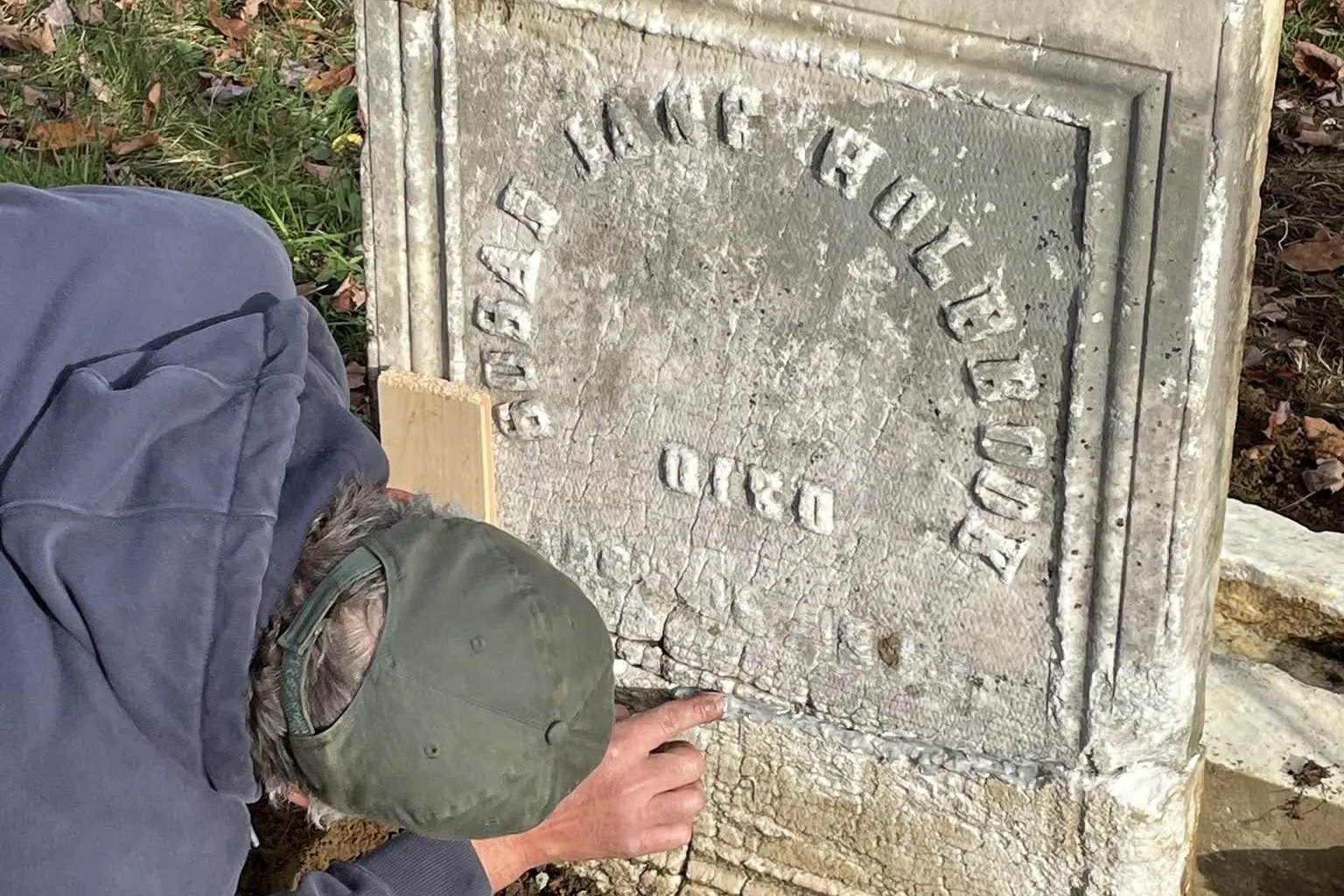
Breaks are when the stone itself has fractured: a snapped tablet, a cracked slab, a piece that's split. These can often be reassembled and bonded with structural epoxy designed for stone. Older marble and slate are the most common candidates. Granite breaks are also fixable depending on the fracture.
Repair FAQs
Common questions about monument repair, resetting, and restoration.
How do I know if a monument needs attention?
Visible leaning is the most obvious sign, but even a slight tilt usually means the foundation has moved or settled. Cracks at the base, separation between the die and base, or a monument that rocks when touched are all signs it should be looked at. When in doubt, send us a photo. We can usually tell from a picture whether it needs work.
Can a broken stone be repaired?
Often, yes. Broken marble and slate slabs — older stones cracked by frost, settling, or impact — are the most common break repairs we do. These typically bond well with structural epoxy and can be reset properly. Granite breaks are also repairable depending on the fracture. Shattered or extensively deteriorated stone is harder to restore. We'll assess it and give you an honest answer before committing.
Why do monuments lean or sink?
The ground moves. Frost heave, soil settling, and original installation issues are the most common causes in Vermont. Even a well-set stone can shift over decades. Foundation problems — too shallow, out of square, or filled with loose rock rather than properly poured — accelerate the issue. These are conditions we look for when assessing a stone, especially on older installations.
How long does repair work take?
A straightforward reset can often be completed in a single visit. Foundation work or structural repairs may require more time depending on the scope and ground conditions. We'll give you a realistic timeline when we scope the project.
Can you repair monuments you didn't originally set?
Yes. We work on monuments from any source, regardless of who made or installed them originally.